Ok my friend Ben emailed me this and I thought it would be worth sharing, for anyone else thinking about moving to Germany.
--
I thought it might be interesting for you for me to bombard you with some random stuff about life in Germany that's not usually covered in most stuff you read. Here's twenty random things covering the good, the bad, the ugly and the awesome.
1) German efficiency
You've probably heard the stereotypes about German efficiency. It's true, but not as true as it used to be. Germany used to be an amazingly efficient country and they handled this by having a billion
rules and regulations for everything. Culturally speaking, everything has "a right way" of being done and anything else is "the wrong way".
Germans have a hard time conceiving of doing anything in any way that they're not used to.
This does lead to great efficiency in many ways, but the scale of bureaucracy has gotten out of hand in the last 20 years or so and some things now take entirely too long to get done because you're busy
dealing with the paperwork of it instead of actually doing it.
This is generally a negative thing about living here, but on the plus side, a "free thinker" (as pretty much most New Zealanders are, and the "geekier" of us even more so) tends to be able to game the
system to their advantage pretty well and astound the Germans with just how quickly and well we can get something done and in ways that they'd never even considered.
2) The weather
We're inland. Pretty far from any major body of water. Our latitude is not dissimilar to southern New Zealand, but without the regulation of the sea, the temperatures can be more in the extremes
(perhaps Central Southland and Central Otago could be considered similar). Summer tends to be mid twenties with a week or two of "blazing hot" around the low thirties. Winter tends to be around
zero, with between a week and four weeks of significant sub-zero temperatures where we get a lot of snow and ice. It's a legal requirement to have winter tyres on the car during winter for this reason. Even in winter though, we get very little hail or sleet -it's snow or nothing. This year, we had very little snow, so even when it dropped to some record lows of around -15, it was a dry cold and really not so unpleasant. This was the first year where I wasn't shitting myself about driving on what amounts to an ice-rink, but I expect that'll be back in the years to come.
3) German cultural peculiarities
Germans themselves have some odd cultural aspects that take a bit of getting used to. Despite having all these rules and regulations, anything that there isn't a rule about tends to be ignored even if
"social politeness" might suffer. The most infuriating thing in my experience is their inability to deal with other people moving around.
If two Germans meet each other passing through a doorway and stop to have a chat, they'll do so IN the doorway so that no-one else can get through. They'll even ignore someone walking right up to them until that person actually says "excuse me" or similar.
Another that I find at least a little annoying is the idea of formally greeting people ALL the time. At a big family dinner, you are pretty much required to go around the table and give everyone a handshake or a hug. You can imagine the chaos when this is required of everyone and you have a group of three or four people turning up to a larger group of 10 or so.
The last one is only a minor thing, but it tripped me up a bit. As with many places, it's "polite" to take people to the door when they leave your apartment/house. However, here that also applies to good
friends and close family. To me, it feels like a lack of trust or so (taking them to the door because you don't trust them not to steal something on the way out) and so with good friends and family, I see
no problem with them letting themselves out. Here, that's apparently extremely impolite and will definitely cause people to talk negatively about you.
4) The food
Food here is cheap and good.
The stuff internationally considered as "German" is more or less Bavarian (other end of Germany) and so, while not unknown or unavailable here at all, certainly isn't daily fodder.
Daily food tends to be things like Schnitzel with various differences sauces; small potato croquettes ("Kroketten"); some less boring mixed vegetable combinations than what we're used to such as
"Kaisergemüse"; and things you'd be more familiar with like boiled potatoes, chicken breast, and so on. They also do a lot of different foods with cheese baked over the top. Always a good thing!
Fish and other seafood is reasonably uncommon and of a terrible quality this far from the sea (more common in coastal areas) however from what I recall you're not a seafood fan so that should be fine by you.
Pork is by far the most common meat - even for things like mince, where in the supermarket you'll see at least twice as much pork mince as any other kind (that said, I always buy beef mince myself).
Seasonally, there are specific foods for specific times of the year, so just as you're getting sick of eating something, a new thing comes along. Seasonal foods include things like a pretty good red cabbage; asparagus (big fat white-ish ones, not small thin green ones); goose meat; and a rather nasty green vegetable thing that I avoid since the first time I tried it ("Grünkohl").
There's some pretty good desserts, such as "Rote Grütze" which is basically just a whole bunch of different kinds of red berries all mashed up and half-way made in to a conserve that is amazingly sweet;as well as reasonable quality puddings.
The typical "junkfood" for after a big night out; while in a hurry; or just when you can't be bothered getting something real, is something called "Currywurst", which is basically just sausage with a
(usually) mild curry sauce and served with chips.
As for chips, they're generally eaten with mayonnaise, however in most places you get a choice of Mayo or Ketchup.
Our company restaurant has excellent food at amazingly low prices, so there's very little reason to buy too much food at home for during the week if you only want a light breakfast and dinner and a big lunch.
Bread is a bit of an odd situation. Germany, like most of Europe makes really good breads. However, they don't sell the good bread in sliced form for sandwiches or toast. Instead, the only sliced bread
you can buy are loaves of tasteless crap generally referred to as "toast bread" or sometimes "American bread" (it often has some kind of logo conjuring up images of America). If you want real bread, you get various kinds of bread rolls and baguettes. Steffi was impressed by the quality of sliced bread when we visited NZ (we bought a variety of different Vogel's bread).
5) The Autobahns
Germany is criss-crossed by the (in)famous Autobahns. Passing through/beside Hannover are the A2 and the A7. The Autobahn is for the most part speed-limit free, however limits do apply when it passes near a residential area (generally 120); when it's raining (generally 120 or 100); when it's icy (generally 80) or when there's an accident or traffic jam ahead (generally 60). During peak hours, the busy parts of the Autobahn also tend to get speed limits. I drive to work on the A2 every day. The part I drive on is limited to 120 during peak hour, or if I leave a little earlier or later, will not be
limited. The "recommended" speed for the Autobahn is officially 130, but that's purely a recommendation and has no legal enforcement.
The Autobahns are generally 3 lanes each way in most places, however some more remote parts may be two lanes each way and in amazingly busy bits like entering Frankfurt can be up to 5 lanes each way.
Overtaking on the right is illegal, so if someone is coming up behind you fast and you CAN move to the right, you must.
Note that "coming up behind you fast" can have a very different meaning here than elsewhere. With no speed limit, it's entirely possible (although thankfully rare) that I'm in the fastest lane going
at my usual cruising speed of 180 (actually 160 to 200 depending on conditions) when some guy in a Lamborghini going nearly 300 is zooming up behind me. With a speed difference of 120, it doesn't take long for him to be right on my arse from the first time I see him in the rear-view.
Trucks usually fill the slow lane. There's a LOT of truck transport. You'll be amazed how much. They're not allowed on the Autobahn on Sundays though (Generally - some exceptions apply).
6) Professions
Historically, Germany had a strong "guild" system with defined levels in the guilds for "masters", "members" and "apprentices".
While the guilds don't really exist anymore (other than a few that transitioned in to a modern kind of profession specific workers club) the concepts of "master" and "apprentice" still exist as well as the
idea that everyone has a profession. Germans choose their profession at an early age and are unlikely to change it in their lives - it is technically possible to do so, but difficult. Almost everyone goes
through doing an apprenticeship somewhere (generally part time work plus part time study combined) and if they're in an appropriate kind of job and go further with their studies of it, will complete a "masterpiece" in order to officially be titled as a master. For the higher professions, this generally matches one-to-one with and is covered by things like writing a doctorate thesis ("Master Doctor" is a little redundant after all...). For professions such as a chimneysweep, it has no equivalent to anything from our side of the world (yes, to be a "master chimneysweep" someone must complete a masterpiece of chimneysweeping (whatever the hell that entails) - otherwise they're just a regular "chimneysweep").
Because of this whole thing, it's not uncommon for people to ask you what your "profession" is. This can be difficult to answer since it requires understanding the German system and explaining that we really don't have something like that. I gave up trying to explain it a while back and generally just say "I'm a software developer". This makes them assume I went to university, but it's less hassle than
explaining it all every time.
7) Sports
Hannover is big on Football (like pretty much all of Europe) and Ice Hockey. They're as unavoidable as Rugby in New Zealand. Fortunately, until you can understand German, you are spared from the boring sports talk in the smoking room at work.
8) Public Transport
Hannover, like most of Germany, has an awesome public transport system. First there's the "Bahn" (Bigger passenger trains). These go from city to city and cover major stops in the larger cities. Then
there's the "S-Bahn" (light-rail) which covers more stops within Hannover and also goes to some outlying towns (up to around 50km away). Then there's the "U-Bahn" which is basically th subway
network. Like Sydney's trains, they're underground in the city centre and above ground elsewhere. They cover pretty much the whole city.
Lastly, there's the buses which will cover a few routes the U-Bahn doesn't (mostly newer, less-affluent or just generally very far outlying suburbs where no tracks have been laid). It's also pretty
cheap - my place is a good 7km or so from the city-centre and it's only 2 euro for an U-Bahn ticket to get me anywhere in the city itself.
Germans complain constantly about the trains being slow, late and unreliable. In comparison to most other places in the world (with the possible exception of Japan) however it is brilliant. Germans just
like complaining about anything that isn't absolutely perfect (the anger people have when they talk about the reasonably rare event of a train being delayed 15 minutes is quite astounding).
9) Internet
Fast, cheap and unlimited. I pay basically 20 euro a month for a 25Mbit connection with no caps and the landline phone. I've in the past regularly torrented non-stop for a whole month (a good 10 to 15GB a day) and it's simply not a problem. Mobile internet is also reasonably good - generally an extra 10 to 20 euro or so a month on your mobile phone bill and it's also unlimited as far as I recall (although significantly slower than a real connection of course). I think there's also limited plans for mobile which are cheaper, but I haven't looked in to it that much so probably need to confirm all of the above for mobile stuff.
10) Stuff to see
Lots, and lots, and lots. Getting places is very easy and there's a lot of really good things even in the local area. Germans would say otherwise, but that's mostly because they're looking at it from a
different perspective. Just hanging out in a cafe built 500 years ago and drinking a coffee (or a beer) while overlooking some cobblestone streets and a thousand year old church is pretty damn awesome for you (if you're anything like me), but a German doesn't notice these things and thinks of that as just "going out for a coffee" and not significantly different than drinking a coffee at the Starbucks in the
mall (yes, we have a mall in Hannover, and yes it has a Starbucks in it).
When Steffi suggests things to do for people visiting here, it's always things like an amusement park; or the zoo; or "AutohausWolfsburg"; and that sort of thing. They're not bad suggestions and all these places/things are well worth a look at least once, but there's way better things to be doing and seeing in general (and drinking a coffee at a cafe like the aforementioned one is also significantly cheaper than a ticket to the zoo).
There's a lot of "fachwerk" houses around in the suburbs and nearby towns. I've always really loved that style (Google Image search to see what I mean).
11) Smoking
Smoking is more "accepted" here than elsewhere in the world.
At work, there's a smoking room (actually a few, but only one main one), but you're also allowed to smoke in your office if no-one else in your office objects (usually, if you're sharing an office though,
there'll be at least one non-smoker, so smoking in your office is unlikely).
When going out to pubs/clubs, the law basically states that they can't allow smoking if they're over a certain size or serve food.
Lots of pubs seem to break this rule, however clubs seem to stick to it for some reason. Even when they don't break the rule, there's plenty of places you can sit and smoke while you drink a beer due to
having smoking rooms separate to the main pub. In many cases, the smoking rooms are significantly larger than the non smoking part.
There's a good pub in town called "Cafe Tabac" which has a huge smoking room and also serves food in there. The "Jack the Rippers English Tavern" (styled as a 19th century underground English pub)
also has a decent smoking room and serve British foods and drinks (one of the few places you can get a decent Cider if you happen to like it).
12) Going out in general
Germany's got much more of a "friendly pub culture" than Australia or New Zealand. People don't go there to get wasted, but rather just to enjoy a few drinks and some good times with friends and then leave again. Of course, some people do get wasted, but that happens in any culture really. Beer is cheap - 3 euro for a half litre is common in most "non upmarket" pubs; and supermarket prices are to the point that it's about the lowest priced drink you can buy (and not just for the crap low quality stuff).
Hannover's got a reasonable club scene with a decent number of places and styles, but me not being the clubbing type, I can't tell you much about them in general - I've only been in to a couple of them
and really not often.
Of course, in summer, THE places to be with friends are the beergardens. There's a variety of different beergardens around from smaller boutique kind of places that Steffi likes (very insular,
people keep to themselves at their tables with their friends and don't interact with others so much) to the really big places with great long rows of picnic-table style seating where if you're alone you can just sit somewhere near some other people and probably end up getting to know them and having a good time drinking and having fun (more my kind of beergarden).
13) Language
Technically speaking almost everyone you encounter learned English at school. Their actual skill in English will however vary wildly from "really doesn't understand a single word" to "speaks it nearly
fluently" with everything in between. For work, this is no problem since we use English as our main work language, however if you want to have any kind of good social life, you're going to have to learn German or limit yourself to a much smaller (and harder to find) group of friends. It can also be a problem for things like taking a car to a mechanic - it's guaranteed that someone who chose to be an auto mechanic really didn't pay too much attention during English class at school, or even if they did, has forgotten it all since through never having used it.
Fortunately, German is pretty easy to learn, and even when you screw up the grammar horribly they tend to understand what you're trying to say (as long as you have approximately the right words, it doesn't matter if you got the gender of a noun wrong or screwed up using the accusative vs dative case for the verb being used).
Also, because of the type of work permit you'll have, the government will require that you take German lessons, and pay for them (excluding a token one Euro per day that you pay). You don't have to start them immediately, as long as you've completed it by the end of your second year here (I waited around a year, but I think in hindsight, 6 months would be better - long enough to get comfortable with life here and learn some absolute basics of the language on your own, but not so
long that you've memorised some things that are simply wrong, like I did and then had to unlearn later).
14) TV/Movies
Germans overdub stuff. Some European countries prefer to play things in the original language, with their own native language as subtitles, but Germans don't. Personally I find the overdubbing absolutely ghastly, since it ruins my concentration when what I hear doesn't match the movement of the actor's lips. So, even though I can understand it, I really don't enjoy German TV at all. The one
exception is cartoons since that mismatch isn't there (well, it technically is, but it's there in English too so your brain just phases it out).
For movies at a cinema complex, if you're lucky you can get to go see a movie in the original language, but they're far less frequent/available than the overdubbed ones.
15) Credit Cards
If you've got one in Australia, keep it and keep your bank account there open. Credit card fees and the system in general are utterly crap here. It's significantly cheaper to use a credit card from Australia and then transfer the money from your German account to your Australian one to pay off the card.
16) Loans for things like a car/etc.
You can only get a loan for the length of time that your work permit is valid. Even though you can renew your work permit indefinitely as long as you're working, you can't get a loan for longer. This makes large purchases unnecessarily difficult. However, it is still possible - for my car, the loan was "officially" two years of payments and then a "lump sum" of the rest of it at the end. After renewing my work permit, I was then able to get the bank to change the lump sum in to normal payments. Technically risky, since if I'd lost my job or whatever, I'd have been required to pay the lump sum in one go which would have been basically impossible.
17) Religion
Germany is primarily Christian with a small but noticeable Islamic minority (almost entirely immigrants). The Christians are divided amongst Lutherans and Catholics, most based on the region of Germany they come from. A reasonably high percentage of people have no religion. Probably an even higher percentage are officially listed as Christian but in reality are not (as with many other countries).
Officially, there is no separation of church and state in Germany, but in practice it's not an issue (except with religious based political parties like the CDU however even they don't go too
overboard with it). The one thing to be careful of is when you move here, they'll ask you what religion you are. If you state that you are of a particular Christian denomination, you will pay an additional tax out of your income that goes directly to the church. If you state that you are an atheist (or any non-Christian religion) you will not.
They probably won't tell you this - it's all hidden behind the seemingly innocent question of your religion...
Unlike some parts of the world, there is no noticeable discrimination against atheists. Discrimination against non-Christians by Christians does occur, but that's an age-old thing (and more prominent in modern times due to the middle-east situation over the last 10 to 20 years or so).
18) Violence
It is extra-ordinarily non-violent here in Germany. Your chance of being mugged in a dark alleyway are close to zero even in "bad" parts of town. If you piss someone off in a pub, there might be a heated yelling match, but for a punch to be thrown someone would have to be extraordinarily drunk (or a foreigner).
19) Driver's Licence
You are a lucky bastard. When I moved here, there was no agreement between Germany and Australia for driver's licences, so I had to get mine from scratch just as someone starting out for the first time.
However, a couple of years back, Germany and Australia made such an agreement and so now it should just be a case of taking your Aussie licence in and trading it for a German one. German licences don't expire (however can be taken off you for traffic infringements as with
elsewhere).
You've got up to 6 months to do this swap-over. For your first 6 months here, your Australian licence is valid (as a tourist basically).
I do suggest you spend some time learning the road rules and general "style" of driving here though - it's fairly different to what you're used to.
20) Toll Roads / Parking / etc
There are no toll roads. Some other countries have them, so driving internationally you need to watch out, but within Germany you can drive anywhere at no cost.
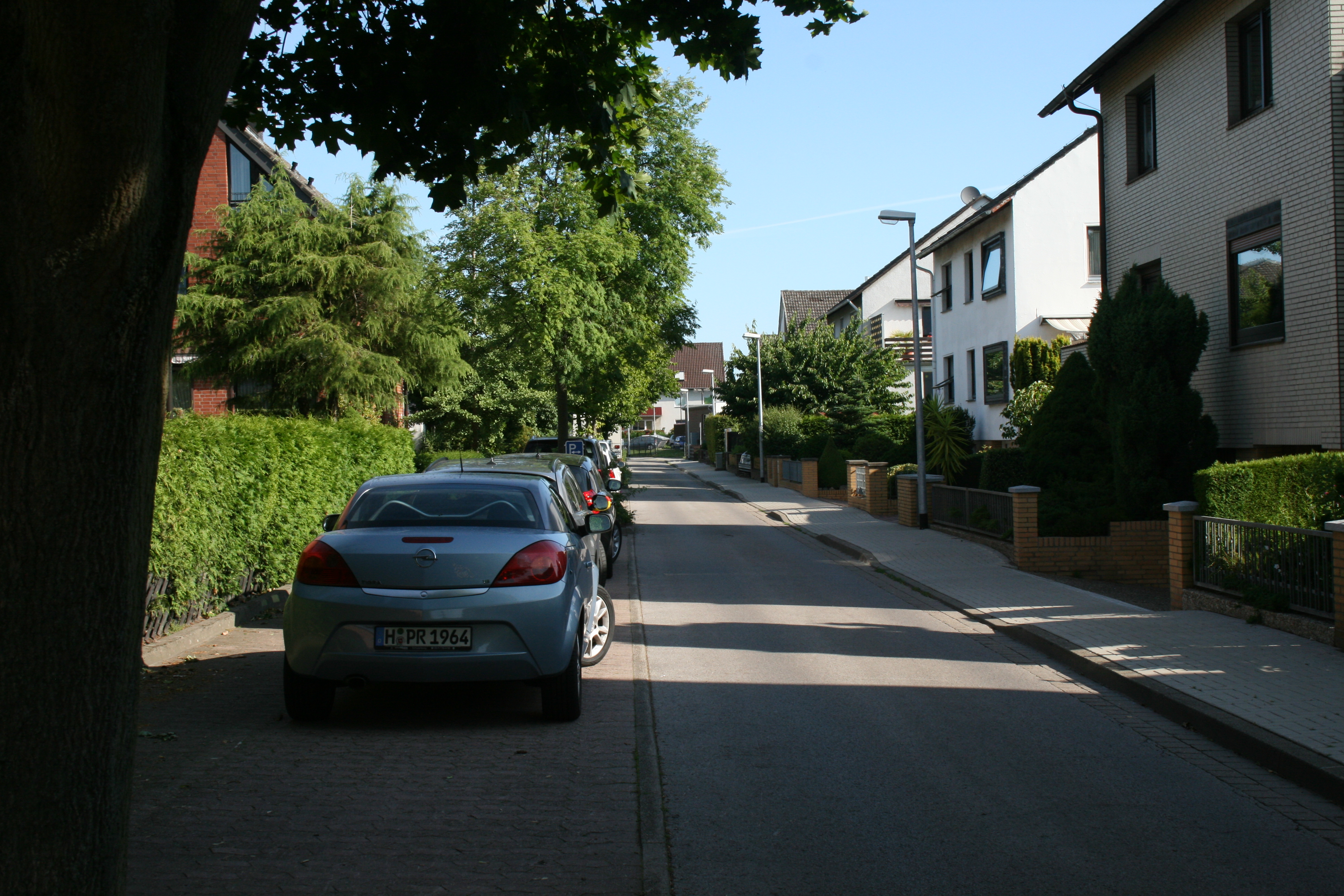
Parking is very reasonably priced in the smaller cities like Hannover - pocket change covers you for all but the most ridiculously extended stays in the city itself. For a good spot in a secure parking garage in downtown Munich however, it's more like Sydney prices. You can also usually park free for a limited time in a lot of places that aren't "right in the city centre", simply by displaying a special parking thing ("Parkscheibe" - Google Image search it) inside your car that you set to the time you arrived before you get out of the car (if you're willing to go back to your car every so often and
reset it to the current time, you can park as long as you like but that is technically illegal despite lots of people doing it (including Steffi)). Parking a little further out (even 15 minutes walk from the
city centre) is generally completely free without needing to use the Parkscheibe (although some suburbs can be pretty hard to find a spot so I generally just pay for the inner city parking).
Cities in Germany have "emission zones" for where you are allowed to drive based on your vehicle's emissions. Generally speaking the further in to a city you want to go, the lower your emissions must be.
Any vehicle which you would buy though will be "green" zone, which means you can drive absolutely anywhere. It's only ancient clunkers and special vehicles with bad emissions (think certain kinds of work trucks and so on) that won't be allowed in to the green zones.




.jpg)


